
• Home
  • Forum
  • Contact Us
  • Search
  • Glossary

The Web Site For Handspinners & Fiber Artists
facebook
twitter
email
pinterest

  • Home
    • How I Started Handspinning
  • Drop Spindle
    • How To Make A Drop Spindle
    • Types of Drop Spindles
    • Spinning Yarn With a Drop Spindle
  • Spinning Wheel
    • Selecting the Right Spinning Wheel
    • Styles of the Spinning Wheel
    • How The Spinning Wheel Works
    • Parts of the Spinning Wheel
    • Adjusting The Spinning Wheel’s Tension
    • Drive Ratios & Twist Per Inch
    • Spinning Wheel Maintenance
  • Techniques
    • Handspinning Woollen and Worsted Yarn
    • Preparing to Handspin Yarn on the Spinning Wheel
    • Basic Handpinning Techniques
    • Adding More Fiber When Handspinning Yarn
    • Plying Yarn with a Spinning Wheel
    • Navajo Plying
    • Making A Skein of Yarn With A Niddy Noddy
    • “Setting In The Twist” Of Handspun Yarn
    • What do I do if? …
  • Fiber Preparation
    • Selecting a Fleece for Handspinning
    • How to Wash Your Fleece
    • Types of Fiber Preparations for Spinning
    • How to Prepare Fiber with Hand Carders
    • How to Prepare Fiber With a Drum Carder
    • How to Prepare Fiber With Dutch Combs
    • How To Prepare Fiber With a Flicker Carder
    • How to Use a Diz
  • Fiber
    • Alpaca
    • Angora
      • How to Care For Your Angora Rabbit
      • Angora Rabbit Breeds
    • Flax
    • Llama
    • Mohair
    • Silk
    • Wool
  • Dyeing
  • Books
    • Spinning Books
    • Knitting Books
    • TIE DYEING Yarn & Fiber – eBook


Handspinning Woollen and Worsted Yarn

Woollen and worsted yarn are two types of yarn that can be handspun. Both types require different fiber preparation on spinning techniques.
Woollen Yarn

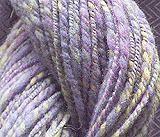
Woollen yarn is spun using a short staple fiber prepared by handcarding and rolled into rolags. A drumcarder can also be used. When spinning the fiber the long draw or medium draw technique is used to allow the fiber to wrap upon itself while trapping air in the center. This makes the yarn soft and bouncy. This yarn is best used for garments that will not be subjected to harsh wear, such as light weight knits. It can also be used for garments that will later go through a fulling process, such as blankets, coats, and jackets. Fulling is a process that contracts the yarn in a knitted garment and makes the fabric stronger.

Worsted Yarn

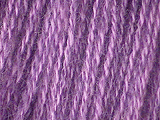
Worsted yarn is spun using a long staple fiber that is prepared by combing with dutch combs or a flicker carder, to keep the fibers parallel, and to remove the shorter ones. When spinning, the worsted technique is used, in which, the fiber is first drafted and then twisted using the thumb and forefinger to flatten the loose fibers. This makes a stronger yarn that can be used for hard wearing garments, rugs, blankets, and warp for weaving.

Basics of Yarn Design

Handspinners are faced with many choices and decisions when designing yarn. Factors that effect the characteristics of the outcome include:

  • The end product – how will the yarn be used? For knitting, weaving, or crochet?
  • The choice of fiber or combination of fibers – Are they suitable for the purpose intended?
  • The preparation of the fibers – Carding or combing?
  • The thickness of the singles
  • The degree of twist in the singles
  • The degree of twist used in plying – or the decision not to ply
  • The blending of colors – whether natural or dyed
  • Varying degrees of twist and thickness in the singles (novelty yarns)

The most important element in yarn design, for a beginner, is understanding the characteristics of the fiber used and what type of yarn it will produce.


Copyright 1999-2013 The Joy of Handspinning. All rights reserved.